The Room Went Quiet When I Said “Good is the Enemy of Great”
Last updated: August 12, 2026
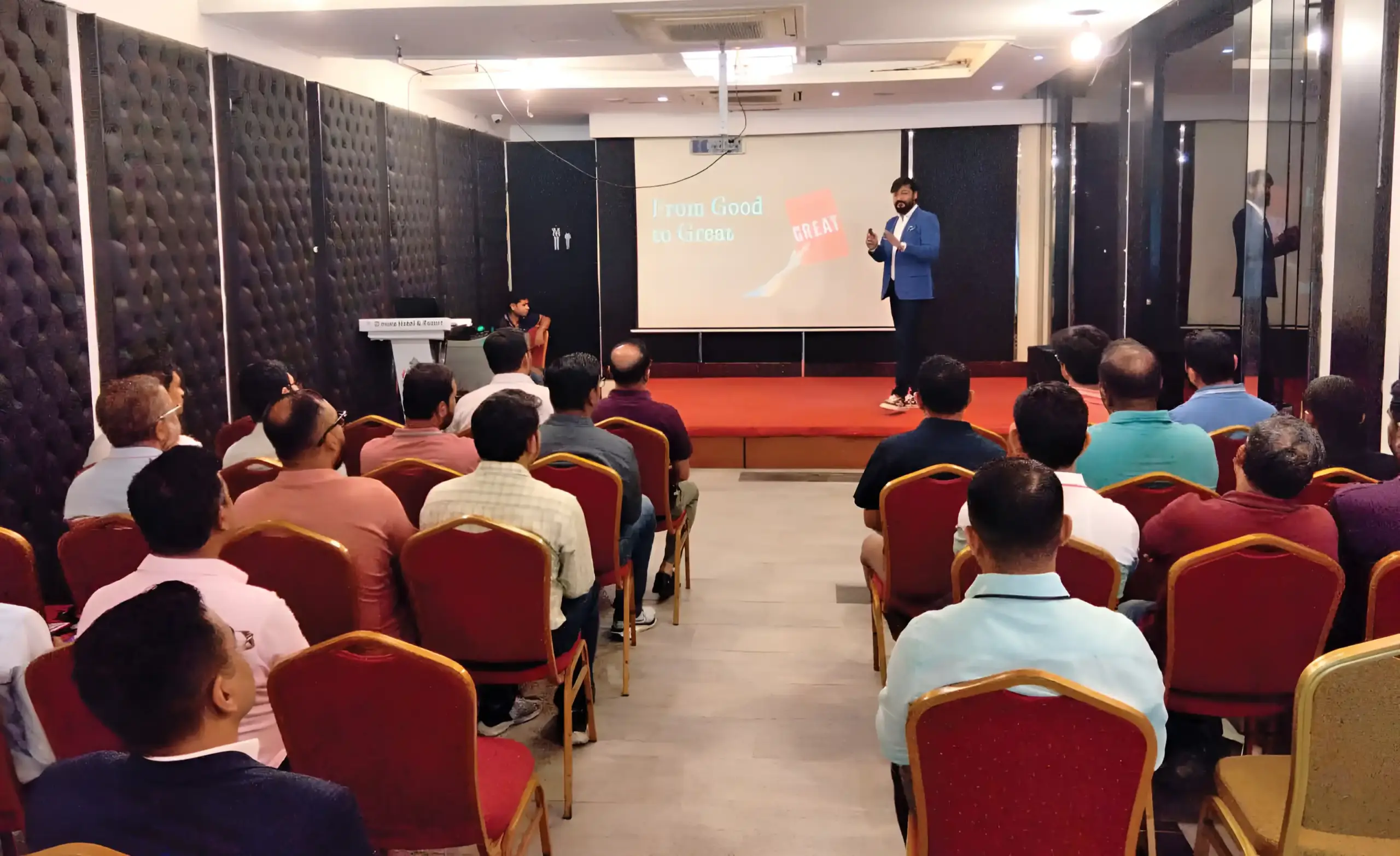
What I learned facilitating a leadership training for AkijBashir managers.
In May 2026, I stood in front of a room of mid-level managers from across AkijBashir Group and asked them to consider a single sentence.
“Good is the enemy of great.”
Jim Collins opened his book with it in 2001. Twenty-five years later, in a training room in Dhaka, it stopped the room.
Not because anyone disagreed. Because everyone recognised themselves in it.
Why this framework
I could have taken the safer route, speak to soft skills, cover empathy, reference the fashionable frameworks of the year. The room would have nodded. Nobody would have been changed.
Leadership training that leaves everyone comfortable is exactly the kind of “good” Collins was warning about.
So I anchored the entire two-hour session around one uncomfortable question: Where in your work are you settling for good because greatness would cost too much?
The difference is not what most managers think
Before going into cases, I put up a simple table on the screen; one that made the room lean forward. Good and great are not different in degree. They are different in kind.
Good does what is expected. Great goes the extra mile. Good seeks comfort and stability. Great embraces risks and stretches for better. Good is motivated by external factors. Great is disciplined in the fundamentals every day. Good focuses on the big picture. Great obsesses over the smallest details. Good creates nice accomplishments. Great creates epic success and a legacy.
Five features. Ten choices. Every day. That is where great is actually built, not in strategy sessions, but in the daily discipline of refusing the good version.
Bringing it home
The moment the session shifted was when I stopped talking about American companies from the 1990s and started talking about brands the room had built.
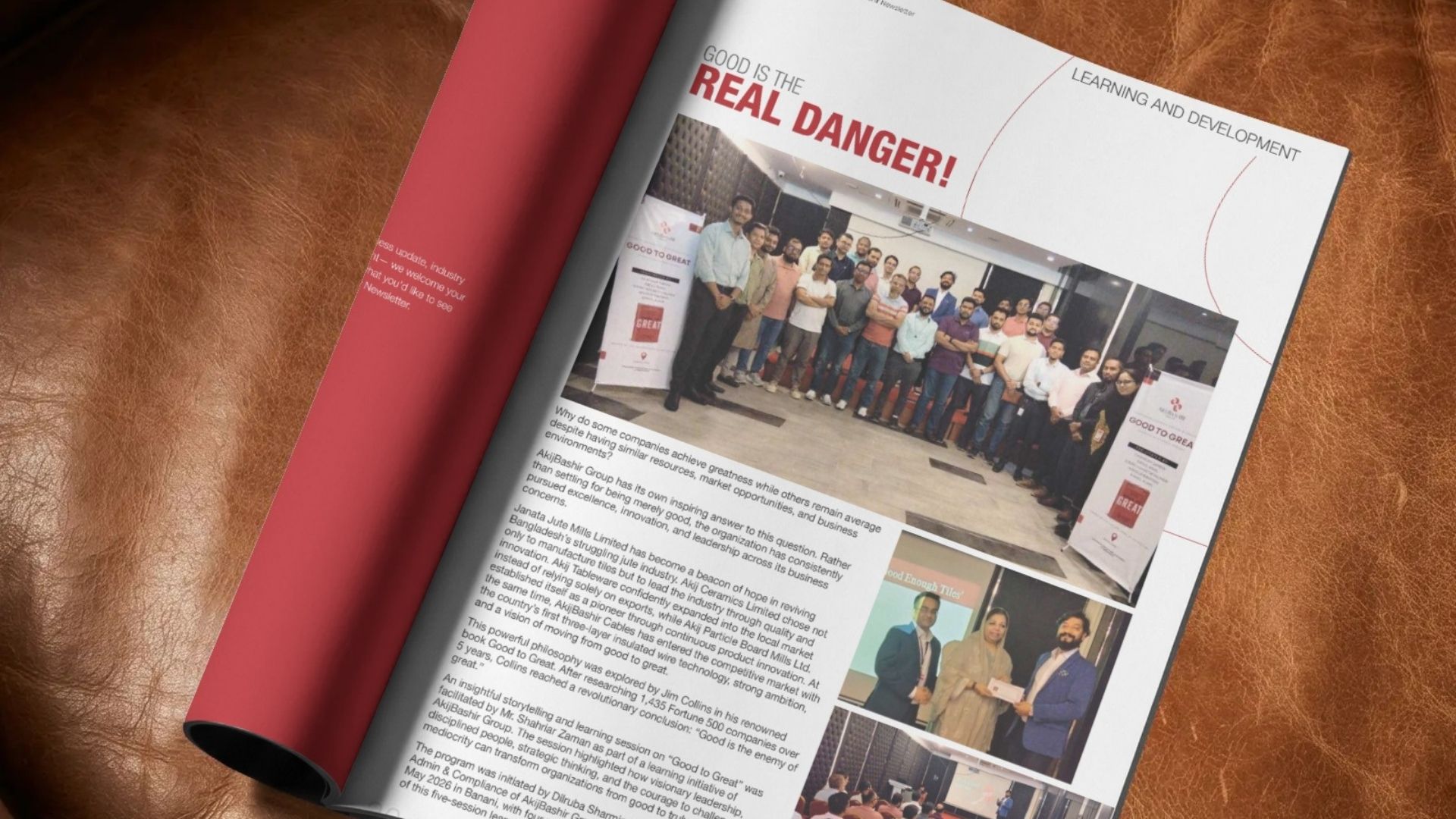
Akij Ceramics. In 2012, the safe move was to be a good local tile manufacturer, compete on price, match imported quality, stay in basic 30×30 wall tiles, let importers own the premium tier. That path was profitable. Instead, Akij Ceramics chose to lead the category. Today: Bangladesh’s #1 tiles brand, covering what was once the imported tiles market, with more than 60% of revenue coming from large-size tiles — and the biggest display network in the industry.
Akij Tableware. The good move was to stay export-only, run a basic distribution model, avoid the complexity of targeting the local market and corporates, let imports define the high end. Efficient. Predictable. Instead, Akij Tableware refused the comfortable corner, building a globally competitive own-brand from Bangladesh with robust nationwide distribution, pioneering in design and service excellence. Within one year, it became the industry leader.
Akij Board. Most board manufacturers stay forever in basic particle board, skip the costly R&D, avoid premium surfaces, treat dealers as transactions. That path had margins. It was scalable. Akij Board chose to redefine what a Bangladeshi board company could be. Today: #1 board brand in the country. A pioneer in innovation. A wide portfolio of surface and core boards. Multiple product categories built beyond the original line.
Three brands. One pattern. Each refused the safer corner. Each invested in capability before the market demanded it. Each defined the standard rather than merely meeting it.
Then I asked the room: Where are you — as a manager — choosing good because greatness would be uncomfortable?
The room went quiet in a different way this time. Not the polite quiet of a training session. The quiet of recognition.
Three lessons for anyone facilitating leadership training
The best case study is the one they already know. Foreign examples create admiration. Local examples create accountability. When I put up Akij Ceramics, the room could not distance itself from the lesson.
Comfort is the enemy of learning. If your training ends with everyone feeling good, you have taught them nothing they will act on. The best leadership training leaves people slightly uncomfortable; because that discomfort is the beginning of change.
The anchor quote matters more than the deck. I built a full deck for this session. But the one sentence people left with was the one they walked in with. Every good training has one line the room takes home. Your job is to make sure they leave with the right one.
Download the deck
The full deck I delivered at AkijBashir Group is available below, including the Level 5 framework, the Stockdale Paradox, the three Akij brand cases, and the reflection exercises.
→ Download: From Good to Great – Humanity in Leadership
Free to use for your own training sessions. Attribution appreciated.
We closed the session with each participant writing down one commitment, one specific area where they would refuse to be merely good in the week ahead.
I do not know how many held. That is not really the point.
The point is that for two hours in a Dhaka training room, a group of managers stopped defending “good” and started interrogating it. They looked at three brands they had helped build and asked themselves whether they were making the same choice in their own work.
That is not a training outcome. That is a leadership shift.
Good is the enemy of great.
It still cuts. It still teaches. And in the right room, on the right day, it still stops the conversation cold.

Written by
Shahriar Zaman
Brand strategist and fractional CMO with 15 years of building category brands. Founder of Ads of Bangladesh and co-founder of Brand Practitioners Bangladesh. Based in Auckland.